
Assistant Professor Kalli Kappel
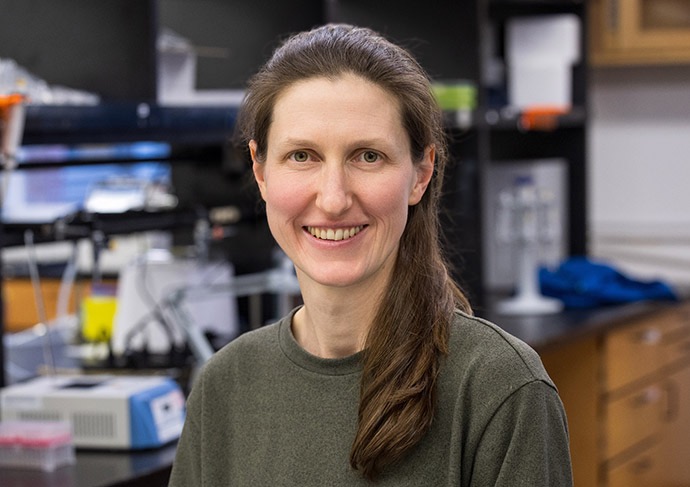
Visionary biophysicist and computational biologist Kalli Kappel joined the Department of Chemistry & Biochemistry as an Assistant Professor in July 2025. She came to UCLA from the Broad Institute of MIT and Harvard and holds the Linda and Fred Wudl Term Chair.
Kappel brings to UCLA a powerful interdisciplinary approach to understanding how the primary sequences of protein and RNA molecules shape their organization and function, strengthening the university’s leadership in foundational, cutting-edge biological science with implications for human health and biotechnology.
“It’s an exciting time to decipher the language of biology – we have the ability to generate massive datasets and the computational tools to stitch these measurements into predictive models,” Kappel says. “I’m excited to build a lab where people feel empowered to ask bold questions and to develop new approaches to answer them, and I’m thrilled to have the opportunity to do this within the incredible scientific community at UCLA.”
The Kappel group develops models of RNA, proteins, and their interactions by combining machine learning with computational biophysics and large-scale experimental data. By examining biophysical properties – such as molecular structure, binding energetics, and the formation of higher-order assemblies – the group investigates the rules governing essential cellular processes such as gene expression, protein synthesis, and signaling. Their goal is to create tools that infer these intracellular properties directly from primary sequences.
To begin exploring these principles experimentally, Kappel’s team recently developed CondenSeq, a platform that simultaneously measures thousands of protein sequences in living human cells. Unlike traditional experiments, which study one protein variant at a time, CondenSeq allows researchers to uncover general rules of protein behavior at an unprecedented scale, revealing the mechanisms that drive the formation of cellular structures. The Kappel Lab is currently building on this approach and developing new high-throughput experimental frameworks to open new paths for understanding human health and disease.
Learn more about Kappel’s research and career: https://sites.google.com/view/kappellab/