
UCLA CHEMISTRY & BIOCHEMISTRY STAFF SPOTLIGHTS
By Kelsea Valerio
Behind every discovery, every lecture, and every breakthrough in the Department of Chemistry & Biochemistry are dedicated staff members whose work often takes place out of the spotlight. This year, we are proud to recognize three individuals whose expertise, commitment, and institutional knowledge have helped shape the department in lasting ways.
Chemistry and Computing on Campus
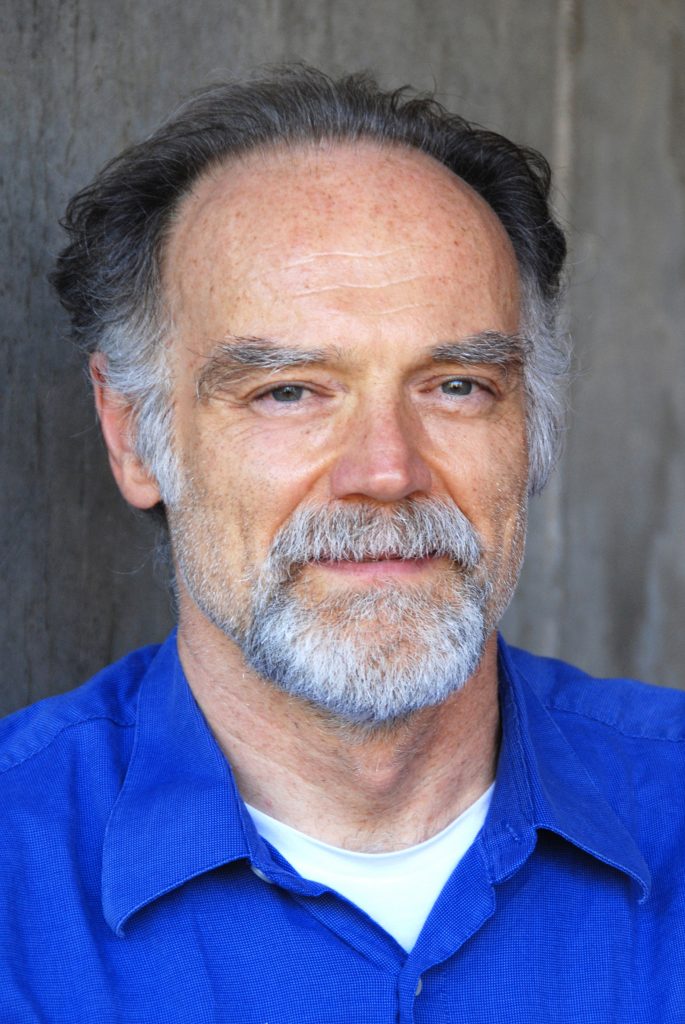
Dr. Max Kopelevich
Born in Lithuania, which was part of the Soviet Union at the time, Dr. Max Kopelevich moved to the United States and pursued his education at UCLA. He completed his Bachelors degree in Chemistry in 1983, his Ph.D. in Chemistry in 1989 in the lab of Professor Frank Anet investigating isotope effects with NMR spectroscopy and computational methods, and his postdoctoral fellowship in X-ray crystallography under Professor Charles Strauss. When initially transitioning to Information Technology (IT) staff in 1990, he thought it would be a short-term move. Max continued to work in UCLA IT through 2025.
Reflecting on technology’s evolution, he recalls a very different ‘pre-PC’ era. “My early undergraduate computer experience included submitting FORTRAN jobs to the Office of Academic Computing mainframe, standing in line with a box of punch cards. In the Department, I used Data General and DEC PDP and VAX computers, some interfaced to instruments, that had printer-like consoles and character-based monochrome terminals.”
Max started his IT career in the Department of Chemistry & Biochemistry overseeing computing and networking operations. In this role he was an early adopter of emerging internet email systems and web services, as well as Unix workstations, servers, and clusters to complement growing numbers of Apple Macintosh and Microsoft Windows personal computers. Max facilitated department-wide licensing of commercial software, such as ChemDraw, LabVIEW, and Schrodinger suite, in addition to installing many open source packages and developing software in-house. A lot of his time was spent troubleshooting IT problems simple and complex, but seeing the impact of these problems on research and teaching made it important to resolve them as quickly as possible.
Max built the department website in 1993, only the second at UCLA after Physics. At this time there were around 100 websites worldwide, mostly hosted by Physics departments and institutes that dealt with CERN. Throughout the 90s Max was “the chemistry web librarian” maintaining Virtual Library: Chemistry for the web inventor Tim Berners-Lee’s master index. This turned out to be a bigger job than he thought, as people from universities, commercial companies, and other institutions started sending requests for additions and corrections.
In addition to his work in the department, Max also designed and led implementation for much of the networking infrastructure in the Division of Physical Sciences. With rapid changes in technologies the divisional network grew from two hundred computers attached to 10Mbps ethernet in 1990 to thousands of wired and wireless systems, some connecting at 100Gbps today. One early test of our networks took place when Max was a technical lead on the UCLA-Kyoto project that ‘joined’ specially equipped classrooms in the two universities (ours in Knudsen Hall) via a high-speed ATM network, with American and Japanese students taking the same courses in Physical, Life, and Social Sciences as well as the Humanities.
Over time his IT responsibilities widened. He went on to play a key role in campus-wide technology initiatives, served on multiple governance boards, and advised UCLA leadership on cybersecurity, instructional technology, and networking infrastructure.
Additionally, as an instructor, Max taught a number of courses, most notably “Chem 125: Computers in Chemistry” every Fall Quarter for more than 30 years. Outside of work, he and his wife attended concerts at Royce Hall, visited the Fowler Museum, and took dance classes on campus. Much of his reading is technical, reflecting his lifelong curiosity and engagement with IT, mathematics, and science. However, he also enjoys reading and re-reading the classics of Russian literature, as well as history and biography books. He is a regular swimmer and enthusiast of winter sports such as hockey and skiing.
“It has been a privilege to learn, work, and teach at UCLA for 40+ years. Young Hall has been a second home with a large extended family of faculty, staff, and students,” Max says.
The Science of Keeping Science Running
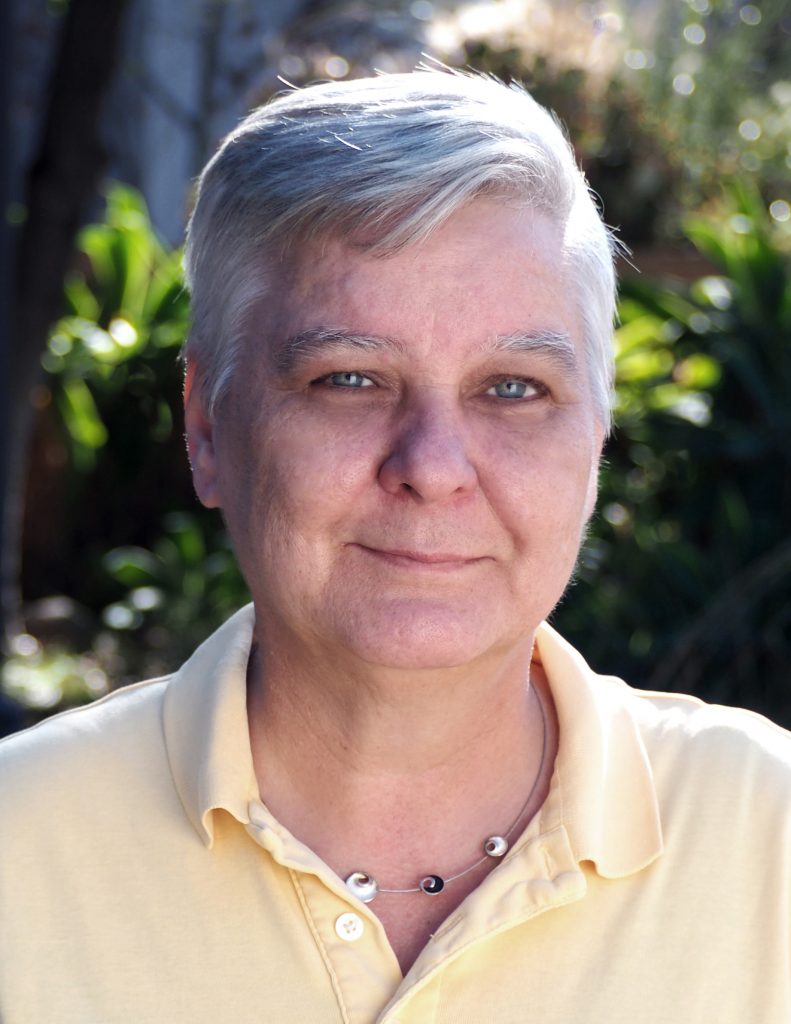
Dr. Janette Kropat
For more than two decades, Dr. Janette Kropat has been a resolute and indispensable presence in the Department of Chemistry & Biochemistry. Growing up in Freiburg im Breisgau, a small city at the foot of Germany’s Black Forest, Janette showed a natural proclivity for math and the physical sciences at an early age. She went on to complete her Ph.D. in Biochemistry at the University of Freiburg. Since arriving at UCLA in 2000 as a postdoctoral researcher in the lab of Professor Sabeeha Merchant, her career has grown in parallel with the department, adapting as it has evolved.
Though she thrived at the bench, Janette realized academia’s traditional path wasn’t for her. She remained in the Merchant lab as a lab manager, overseeing complex renovations, before moving into a departmental administrative role in 2013. Today, Janette plays a vital role as the Facilities and Operations Manager. Her work requires constant problem-solving, from coordinating urgent repairs to navigating the complexities of older lab spaces. “You have to care about what you are doing,” she notes. “It’s not something you can get done by just pressing a button.”
Her scientific training continues to shape her approach. “As a researcher, you learn how to learn,” she says. “You figure out how to identify problems, gather information, and find solutions.” That same mindset now guides her in addressing everything from malfunctioning fume hoods to unexpected building emergencies. While major incidents, like fires, are rare, the day-to-day challenges of maintaining a large research facility are constant, especially in an era of limited resources and increasing demands.
Outside of work, Janette enjoys sailing though the UCLA Marina Aquatic Center in Marina del Rey. Her love of kayaking has led her to Black Canyon at the base of the Hoover Dam and along the coast of Catalina Island. In her downtime, she often turns to a good mystery novel, following clues from the comfort of her own home.
The Backbone of the Department
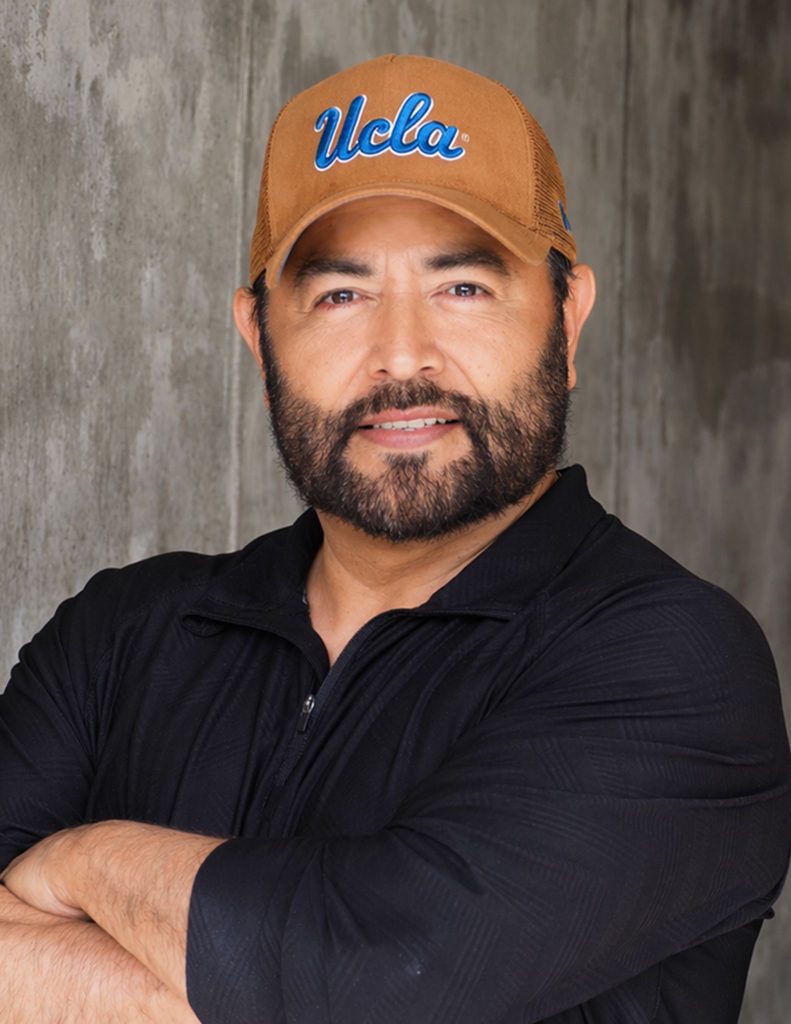
Nati J. Alcaraz
In the spring of 1994, Nati Alcaraz joined the department as assistant to the operations manager, eager to take on the challenges and responsibilities of the role. The complexities of administering scientific facilities can be daunting, but he approached his work with curiosity and enthusiasm. He quickly became an integral part of daily operations – so much so that it is now difficult to imagine the department without him. Today, nearly every office, lab, classroom, utility, storage area, and interior public space reflects his contributions to preparing, organizing, and maintaining the environment.
When he is not moving through department buildings coordinating a steady stream of tasks and issues, Nati can be found in the information center at Young Hall 3034. There, he greets guests and outside organizations, assists students, and helps address the wide range of questions and concerns that arise each day. No task is too large or too small – he is always willing to lend a hand.
Much of Nati’s work takes place behind the scenes and continues even when the campus and department are quiet. His efforts range from taking preventive measures to avoid incidents such as floods and other emergencies to conducting building inspections in off-hours. During winter break, while most students, faculty, and staff are away, he returns to ensure that department facilities remain secure and in proper order.
As Nati has said, “Here in the department, everything has a purpose and is connected. Students, faculty, staff, visitors, outside organizations, and campus support all play a role in keeping things moving forward.”
In his leisure time, Nati enjoys playing racquetball – a pastime he’s been told he’s “pretty good at.”